Rough-terrain cranes in Victoria, TX
For gravel pads, plant yards and ground that a truck crane would not like. Tell us the load and the ground, and independent local operators quote the crane, with or without an operator.
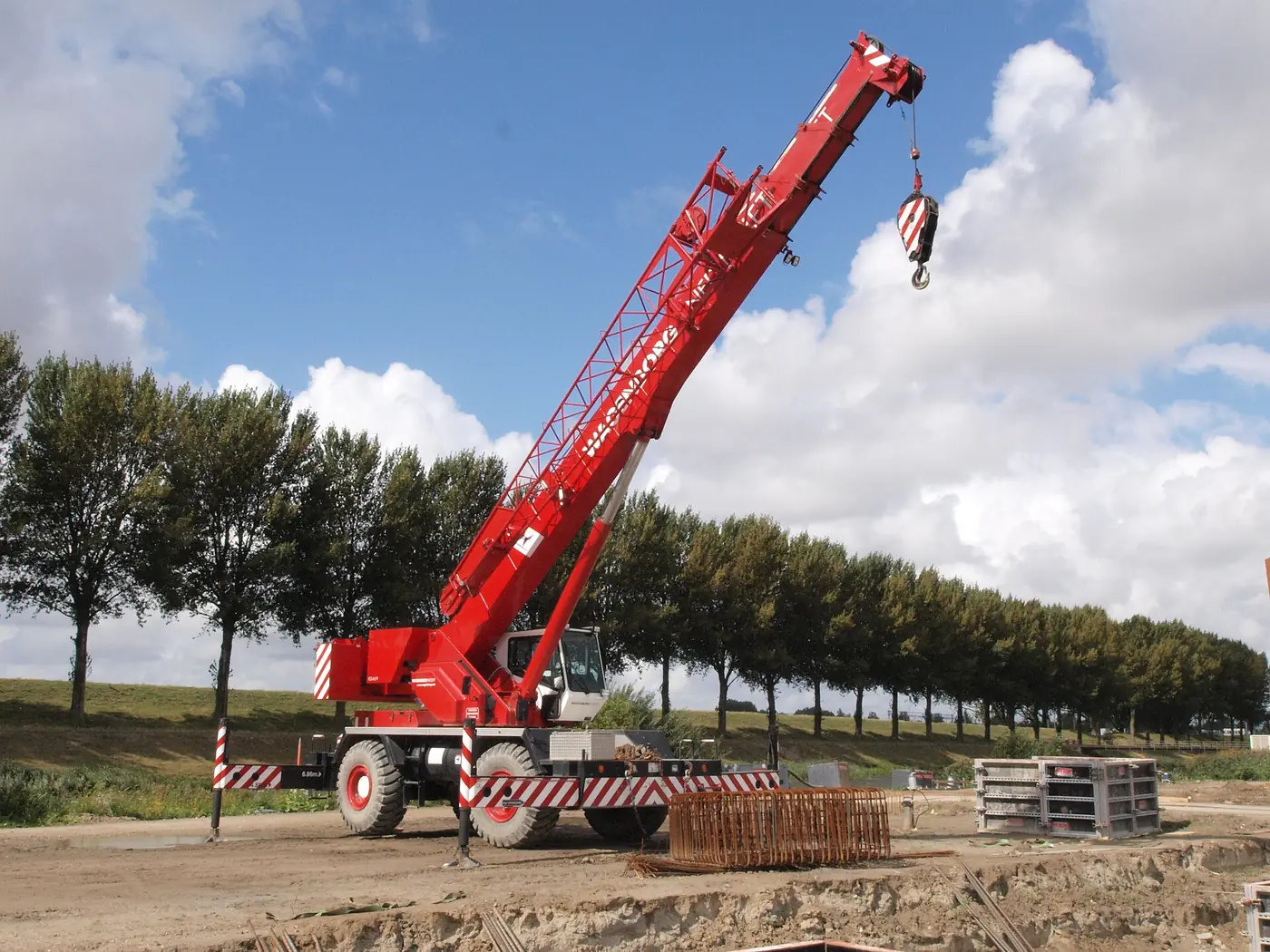
Rough-terrain, all-terrain or a truck crane?
The three share a job description and differ in where they work well. Picking the wrong one shows up as extra trucks, extra mats or a crane that cannot reach the pad.
A rough-terrain crane fits when
- The ground is gravel, caliche, packed soil or uneven
- The crane has to work inside a yard and move between picks
- Space is tight: it has a short carrier and big tires
- The job is a day or more, so one trucked-in delivery pays off
An all-terrain crane fits when
- The crane has to travel the road between sites under its own power
- The pick needs a longer telescopic boom and more reach
- The ground is firm enough, or matted, for a larger machine
- The load is heavier than a small rough-terrain unit handles
A truck crane is enough when
- The crane can stand on pavement or hard, level ground
- The pick is short, light and over in a few hours
- Fast set-up matters more than off-road ability
- See crane with operator and boom trucks
Where they earn their place around Victoria
Most of the region is flat, but flat is not the same as firm. These are the sites where the crane's footing decides the type.

Plant yards and pads
Gravel and shell pads inside industrial sites, where the crane works between process units and laydown areas. Plant rules apply on top of the crane's own.
Plant maintenance, industrial contractors
Unpaved construction sites
New slabs, tilt-up panels and equipment pads before the paving goes in, often reached across graded dirt.
General contractors, steel erectors
Farm and ag sites
Grain bins, irrigation gear and machinery on farm roads and field edges. Ground that is hard in a dry spell can be soft after rain, so say when the job is.
Farms, ag dealers, bin builders
Pipeline and utility right-of-way
Setting pipe, valves and equipment along cleared strips where a road-going crane cannot follow.
Pipe crews, utility contractors
Uneven or fresh-fill ground
Lots with fill, ruts or a slope. The operator may ask for photos and mats before agreeing to the set-up.
Any buyer whose pad is not paved
Size up your lift
This is geometry, not a load chart. A crane's capacity drops as the radius grows, and the operator adds the hook block, the rigging and room above the load before choosing a crane.
Operators size a crane from three numbers: the heaviest piece, the radius (the level distance from where the crane sets up to where the load lands) and the set height. Measure or estimate them before you ask for a quote.
- Straight-line reach to the set point
- 50 ft
- Load moment (weight × radius)
- 240,000 ft-lb
120 ft-tons
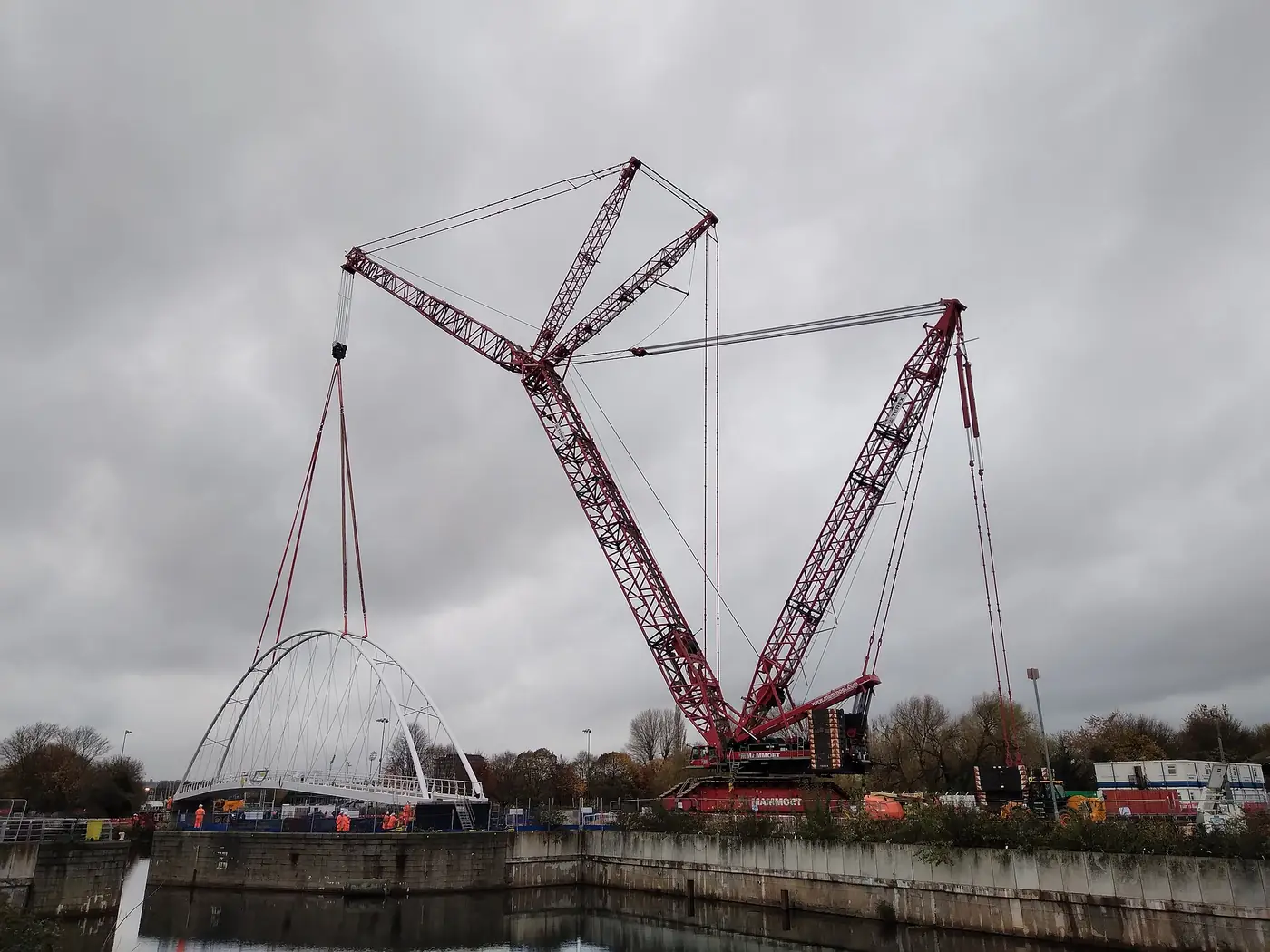
Ground, mats and getting there
- Outriggers load the ground
- A crane puts its weight and the load through a few small pads. Soft soil, fresh fill and buried pipe or tanks can fail under that, so operators often ask for mats or cribbing.
- Mats and cribbing
- Timber or composite mats spread the load. They are usually a separate line in the quote and may need their own truck.
- Send photos of the set-up area
- One wide shot and one of the ground itself help an operator decide before a site visit. Mark the spot where the crane would stand.
- Mobilization
- A rough-terrain crane is slow on the road and usually arrives on a lowboy trailer, so travel from out of town shows up on the quote.
- Operated or bare
- With an operator, the crane company runs and plans the lift. Bare means your own qualified operator and riggers. Bare crane rental
Rules that apply
Not legal advice: a short map of what buyers ask about. The operator and the site owner have the final word.
Operator certification
OSHA's construction crane rule, 29 CFR 1926.1427, covers operator training, certification or qualification for most cranes over 2,000 lb rated capacity. It does not replace state or local licensing.
Ask each company about its operators' certifications. OSHA crane FAQ
Power lines
OSHA has specific requirements for crane work near overhead power lines (29 CFR 1926.1408), including clearance distances. Mark every line near the pad and the swing path in your request.
Plant pads
A plant decides who may enter, what training and permits are needed and whether a written lift plan is required. Ask the plant, and put it in your request. Plant and turnaround lifts
Rough-terrain crane questions
Which typeWhat is the difference between a rough-terrain crane and a truck crane?
A rough-terrain crane has big tires, a short carrier and four-wheel drive for soft or uneven ground, and works mostly on one site. A truck crane is built on a road chassis and suits paved, level set-ups. If your pad is gravel or dirt, ask for the rough-terrain option.
Road travelCan a rough-terrain crane drive to my site?
Usually not far. Most are built for slow travel on a site and arrive on a lowboy trailer. An all-terrain crane is made for road travel. Which one comes depends on what is available near you, so mention distance and access in your request.
MatsWill I need crane mats?
Often on soft soil, fresh fill or ground you are unsure of, and sometimes on pads that look solid. The operator decides from your photos and the load. Ask whether mats are in the quote or a separate line.
Operated or bareCan I rent a rough-terrain crane without an operator?
Often yes, if you can supply a qualified operator and riggers. Expect to be asked about operator qualifications and insurance. See bare crane rental for what changes.
Plant workDo I need a plant pass to bring a crane into a plant?
Plants set their own entry rules, which can include gate sign-in, safety orientation and work permits for the crane and its crew. We cannot tell you a plant's requirements; ask the plant, and tell the operator what it says.
TravelHow far will a crane travel to Victoria?
That depends on the operator and the crane. A mobilization charge often applies, and a larger unit may come from out of town; the nearest crane company we found in research is in San Antonio, about two hours away. Local operators who respond will say what they can reach.
Request a rough-terrain crane
Four short steps, about two minutes. "Rough-terrain / all-terrain crane" is already selected; change it if another service fits better.
We pass your request to independent local operators who quote you directly. We are a quote-request service, not a crane company.
Related lift services
Not quite a rough-terrain job? These pages cover the neighbouring requests. Towns we take requests from
The crane, operator and travel quoted as one job.
Lighter picks, pipe, poles, panels and material drops.
Lifts inside petrochemical and industrial sites.